Key Stuck in Lock? 5 Safe Methods Boston Homeowners Can Try Before Calling a Locksmith
July 31, 2025
It's 6 AM on a Tuesday morning in Brookline. You're already running late
for your commute into downtown Boston, and as you try to lock your front door,
disaster strikes—your house key gets completely stuck in the lock.
The key won't turn, won't come out, and you're officially trapped between
being late for work and leaving your home unsecured. Don't panic. This frustrating situation happens to Boston homeowners
every single day, and in most cases, you can safely resolve it yourself in just a few minutes.
for your commute into downtown Boston, and as you try to lock your front door,
disaster strikes—your house key gets completely stuck in the lock.
The key won't turn, won't come out, and you're officially trapped between
being late for work and leaving your home unsecured. Don't panic. This frustrating situation happens to Boston homeowners
every single day, and in most cases, you can safely resolve it yourself in just a few minutes.
Why Do Keys Get Stuck in Locks?
Before we dive into solutions, understanding why this happens can help prevent future incidents:
- Weather-related expansion : Boston's dramatic temperature swings cause metal keys and lock cylinders to expand and contract
- Worn key teeth : Daily use gradually wears down key edges, making them catch in lock pins
- Debris buildup : Dust, lint, and pocket debris accumulate inside lock cylinders
- Misaligned lock cylinder : Door settling or loose hardware can throw off internal alignment
- Key damage : Bent or slightly warped keys from keychains or accidents
5 Safe DIY Methods to Free Your Stuck Key
Important Safety Note
: Never force a stuck key or use excessive pressure. This can break the key inside the lock, turning a 5-minute fix into a $150+ emergency locksmith call.
What you'll need
: Just your hands
Time required
: 30 seconds to 2 minutes
What you'll need
: Ice cubes in a plastic bag or ice pack
Time required
: 5-10 minutes
Best for
: Summer humidity issues common in Boston
What you'll need
: 3-in-1 oil, WD-40, or similar penetrating oil
Time required
: 5-8 minutes
What you'll need
: Small hammer or heavy screwdriver handle
Time required
: 1-2 minutes
Use only as last resort
Method 1: The Gentle Wiggle Technique
What you'll need
: Just your hands
Time required
: 30 seconds to 2 minutes
- Ensure the key is fully inserted - Sometimes keys get stuck halfway in
- Apply very light pressure toward the "unlock" position while gently wiggling the key up and down
- Try small circular motions while maintaining slight turning pressure
- Never force it - If you feel significant resistance, stop immediately
Method 2: Graphite Lubrication
What you'll need : A pencil with soft graphite (No. 2 or softer) Time required : 2-3 minutes- Rub the pencil graphite all over both sides of your key, covering the teeth thoroughly
- Insert and remove the key several times to distribute the graphite
- Try turning the key with gentle, steady pressure
- Repeat if necessary - You may need 2-3 applications for heavily stuck keys
Method 3: The Ice Method (For Swollen Locks)
What you'll need
: Ice cubes in a plastic bag or ice pack
Time required
: 5-10 minutes
Best for
: Summer humidity issues common in Boston
- Hold ice against the lock cylinder for 3-4 minutes
- Focus on the keyhole area where swelling typically occurs
- Remove ice and immediately try the key with gentle pressure
- Repeat if needed - Some locks require 2-3 cooling cycles
Method 4: Light Oil Application
What you'll need
: 3-in-1 oil, WD-40, or similar penetrating oil
Time required
: 5-8 minutes
- Spray a small amount of oil into the keyhole (2-3 drops maximum)
- Work the key gently in and out to distribute the lubricant
- Wait 2-3 minutes for the oil to penetrate
- Try turning with steady, gentle pressure
- Wipe excess oil from the key and lock face
Method 5: Tap and Turn Technique
What you'll need
: Small hammer or heavy screwdriver handle
Time required
: 1-2 minutes
Use only as last resort
- Hold the key firmly in the lock
- Gently tap the key head with your tool while applying slight turning pressure
- Use light taps only - You're trying to jar stuck pins, not break anything
- Stop immediately if you feel the key starting to bend
When NOT to Try DIY Solutions
Stop immediately and call a professional locksmith if you encounter any of these situations:
If your key has snapped and part remains in the lock, don't attempt removal. Professional extraction tools prevent pushing fragments deeper into the cylinder.
Medeco, Mul-T-Lock, and other high-security systems require specialized knowledge. DIY attempts often void warranties.
Electronic components can be damaged by oils or moisture. These require professional diagnosis.
If you've tried 3+ methods without success, the problem likely requires professional tools and expertise.
Scratches, dents, or obvious wear around the keyhole indicate internal damage that needs professional assessment.
Red Flag #1: Broken Key Pieces
If your key has snapped and part remains in the lock, don't attempt removal. Professional extraction tools prevent pushing fragments deeper into the cylinder.
Red Flag #2: High-Security Locks
Medeco, Mul-T-Lock, and other high-security systems require specialized knowledge. DIY attempts often void warranties.
Red Flag #3: Smart Locks or Electronic Systems
Electronic components can be damaged by oils or moisture. These require professional diagnosis.
Red Flag #4: Multiple Failed Attempts
If you've tried 3+ methods without success, the problem likely requires professional tools and expertise.
Red Flag #5: Visible Lock Damage
Scratches, dents, or obvious wear around the keyhole indicate internal damage that needs professional assessment.
Preventing Future Key-Stuck Incidents
Regular Maintenance Tips:
- Lubricate locks quarterly with graphite or professional lock lubricant
- Keep spare keys - worn keys are more likely to stick
- Check door alignment - Settling doors put stress on lock mechanisms
- Clean pocket debris from keys regularly
- Replace worn keys before they become problematic
Boston-Specific Prevention:
- Winter prep : Apply graphite before first freeze to prevent ice-related sticking
- Summer humidity : Run dehumidifiers to prevent metal expansion
- Salt protection : Wipe door hardware clean after snow storms to prevent corrosion
When to Call Astro Locks: Your Boston Locksmith Experts
While these DIY methods solve most stuck key problems, some situations require professional expertise. Here's when to call us:
- Key broke inside the lock - We have specialized extraction tools
- Lock won't work even after key removal - Internal damage needs professional repair
- Repeated sticking problems - Could indicate worn lock cylinder needing replacement
- Security concerns - If you suspect lock tampering or damage
- Time constraints - Need immediate access for work or family emergencies
Why Boston Homeowners Choose Astro Locks:
✅
Same-day service
throughout Boston, Brookline, Newton, and surrounding areas
✅ No-damage guarantee - We fix problems without unnecessary drilling
✅ Upfront pricing - No surprise charges or bait-and-switch tactics
✅ Licensed and insured professionals with years of Boston-area experience
✅ Emergency availability - Because lock problems don't wait for business hours
✅ No-damage guarantee - We fix problems without unnecessary drilling
✅ Upfront pricing - No surprise charges or bait-and-switch tactics
✅ Licensed and insured professionals with years of Boston-area experience
✅ Emergency availability - Because lock problems don't wait for business hours
Get Professional Help When You Need It
Astro Locks
has been serving the Boston metropolitan area with trusted residential, commercial, and automotive locksmith services. Our commitment to customer satisfaction and fair pricing has made us the go-to choice for homeowners and businesses throughout Massachusetts.
Related Services:
Related Services:
- Residential Lock Repair
- Lock Rekeying Services
- Emergency Lockout Service
- High-Security Lock Installation
More Marketing Tips, Tricks & Tools
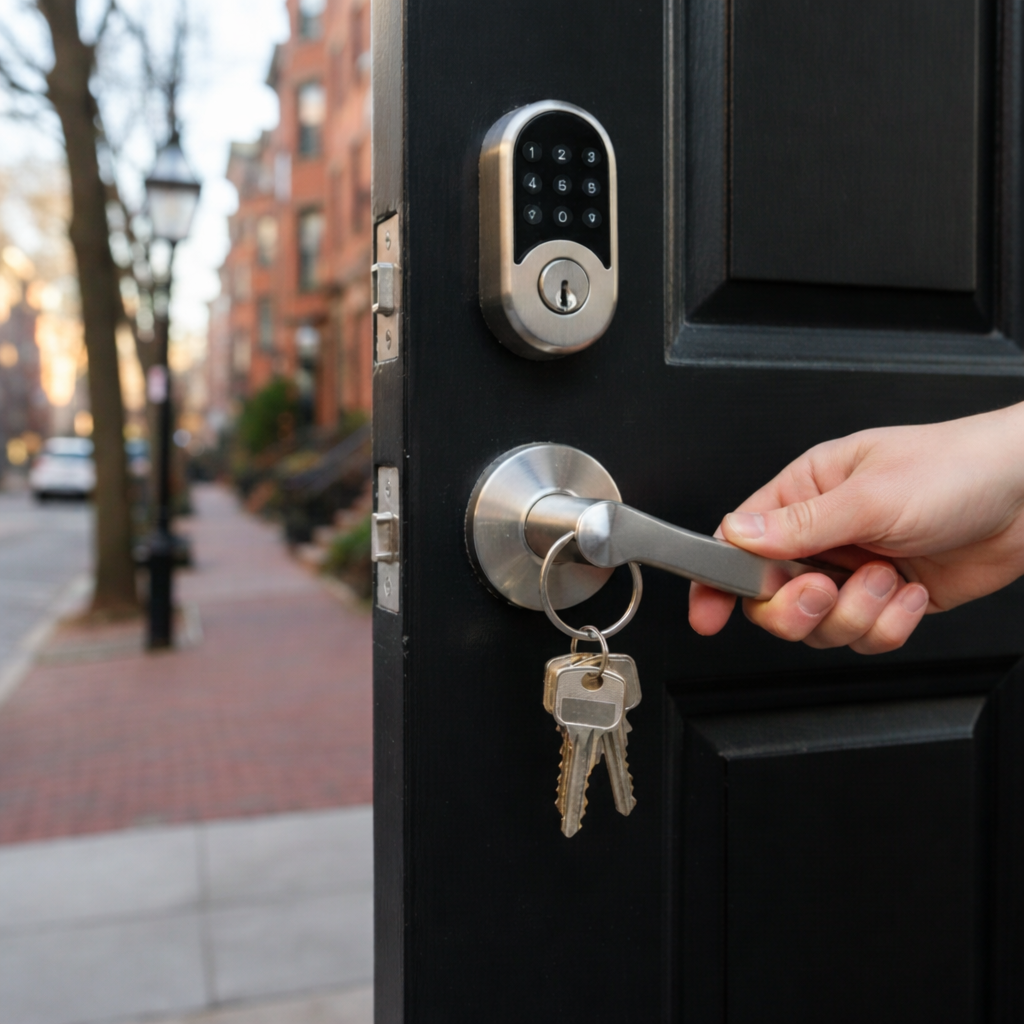
Your new Boston home should feel like a sanctuary, not a security risk. Whether you're closing on a Back Bay brownstone or settling into a triple-decker in Jamaica Plain, taking control of your home security from day one isn't just smart-it's essential. Here's the reality most new Boston homeowners don't think about: by the time you get the keys to your new place, dozens of people may have had access. Previous owners, their family members, real estate agents, contractors, cleaning crews, neighbors with "spare keys"—the list goes on. And in a city where home values average well over $700,000, leaving your security to chance just doesn't make sense. At Astro Locks , we work with new Boston homeowners every single week. We've seen it all-from folks who discovered the hard way that their "new" locks had copies floating around, to smart buyers who locked down their security before they even moved in. This guide walks you through exactly what you need to do to secure your Boston home properly, whether you're a first-time buyer in Somerville or downsizing to a condo in the Seaport.
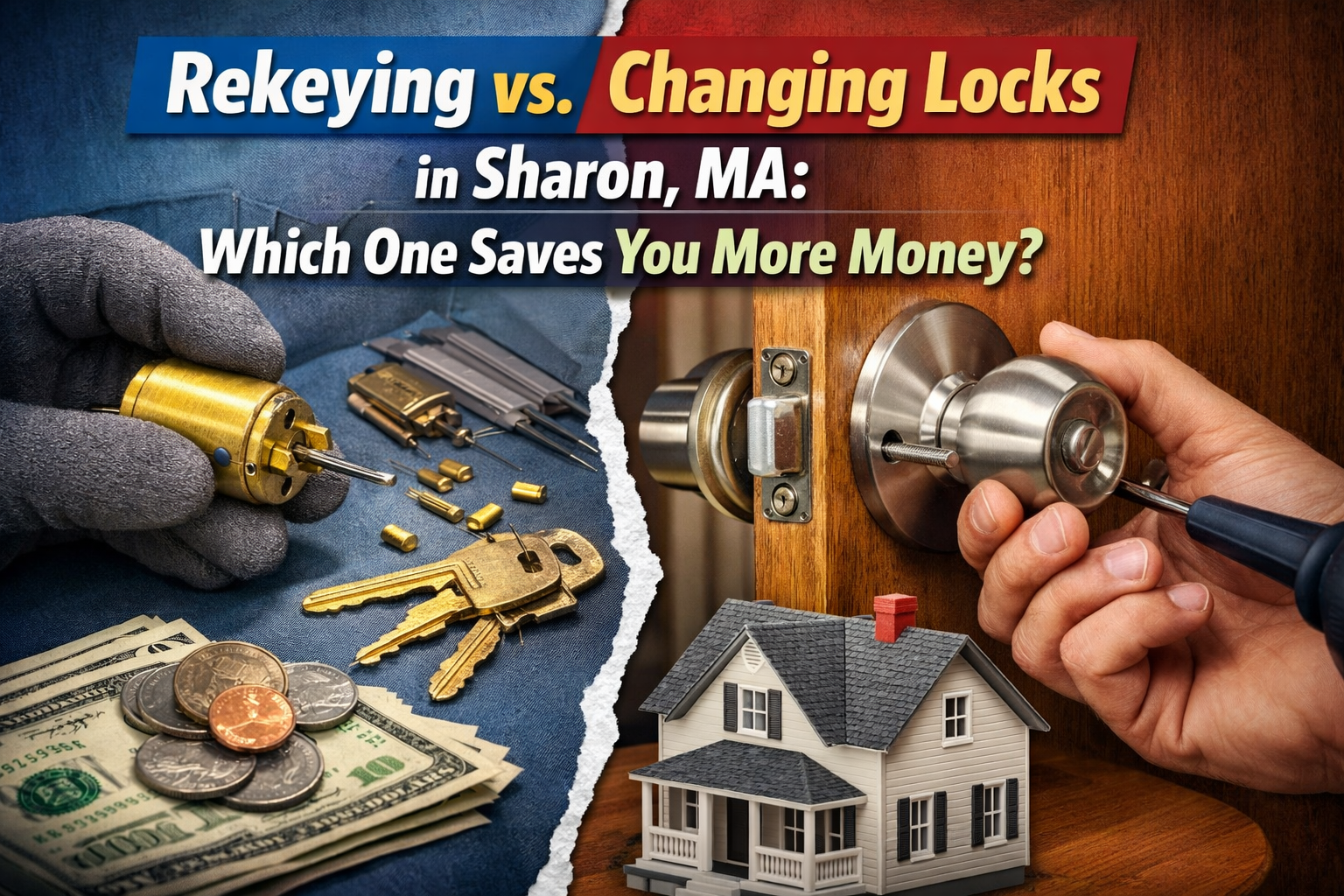
You just bought a house in Sharon. Or maybe a tenant moved out of your rental property. Perhaps you lost track of who has keys to your business on South Main Street. Whatever the situation, you're standing there looking at your locks thinking: "Do I need to replace these entirely, or can I just rekey them?" It's one of the most common questions we get at Astro Locks, and honestly, it's a smart one to ask. The difference between rekeying and changing locks can mean hundreds of dollars in your pocket—or completely wasted if you choose the wrong option for your situation. Let's break down exactly what each option involves, what it costs in the Sharon area, and most importantly, which one makes sense for your specific situation.
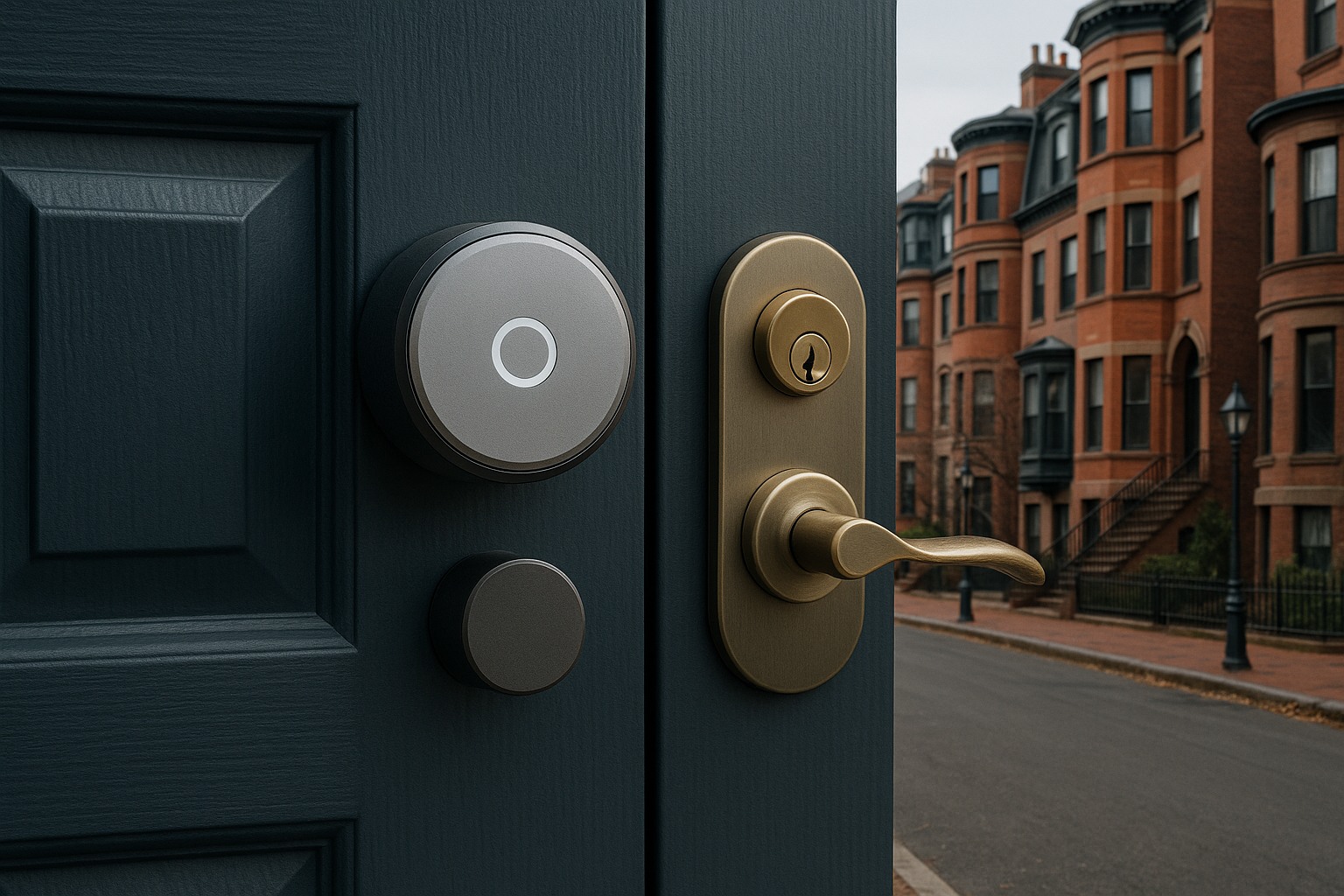
There's a moment most Boston homeowners experience at least once: standing in the rain outside your Brookline brownstone, fumbling through your bag for keys while grocery bags cut into your arms. Or maybe you're in Somerville, trying to let a contractor in while you're stuck in downtown traffic. These everyday frustrations have sparked a question we hear constantly at Astro Locks: should I switch to a smart lock, or stick with what's always worked? The short answer? It depends on your lifestyle, your home, and what keeps you up at night. After installing both types of locks across Greater Boston for over 20 years, we've learned there's no one-size-fits-all solution. Some homes genuinely benefit from smart technology, while others are better off with high-quality traditional locks. Let's walk through what you actually need to know, without the marketing hype or technical jargon.
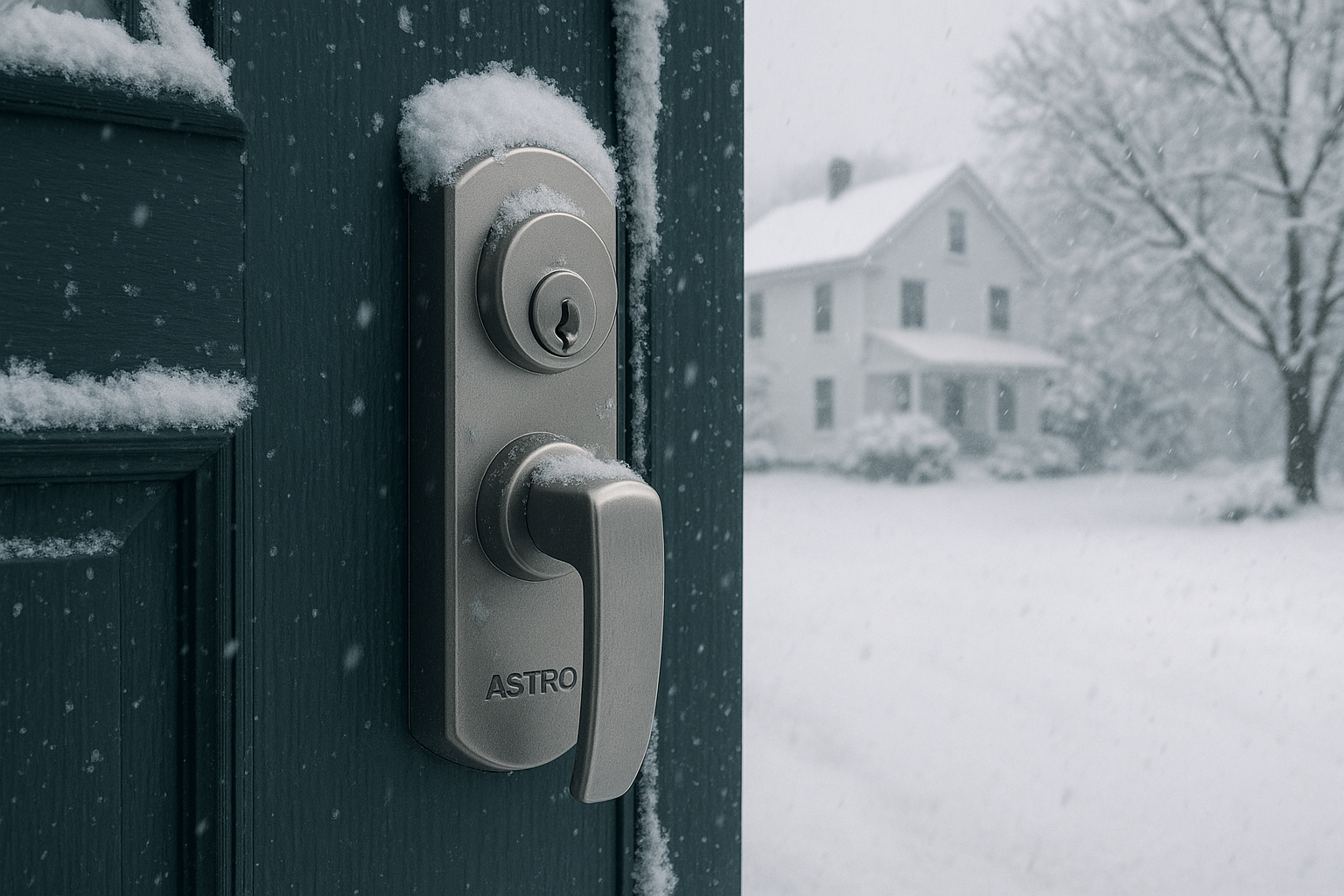
You know that moment when you're standing outside on a freezing January morning, already running late, and your key won't turn in the lock? Yeah, we've all been there. Welcome to winter in Massachusetts, where your door locks face some of the harshest conditions in the country. Here's what most Sharon homeowners don't realize: not all locks are created equal when it comes to surviving our winters. Some handle the cold like champs, while others might as well wave a white flag the moment temperatures drop below 20 degrees. If you've ever dealt with a frozen lock at 6 AM or struggled with a sticky deadbolt during a snowstorm, you already know how frustrating this can be. The good news? You don't have to put up with it. Let's talk about what actually works when Mother Nature decides to test your door hardware.

When you're standing at your front door juggling grocery bags, a coffee, and trying to fish your keys out of your pocket, you've probably thought: "There has to be a better way." Well, there is. Smart locks have gone from futuristic novelty to practical reality, and more Sharon homeowners are making the switch every year. But here's the thing – not every home needs a smart lock, and not every smart lock is right for every home. If you're trying to figure out whether it's time to upgrade from your traditional deadbolt, this guide will walk you through everything you need to know.
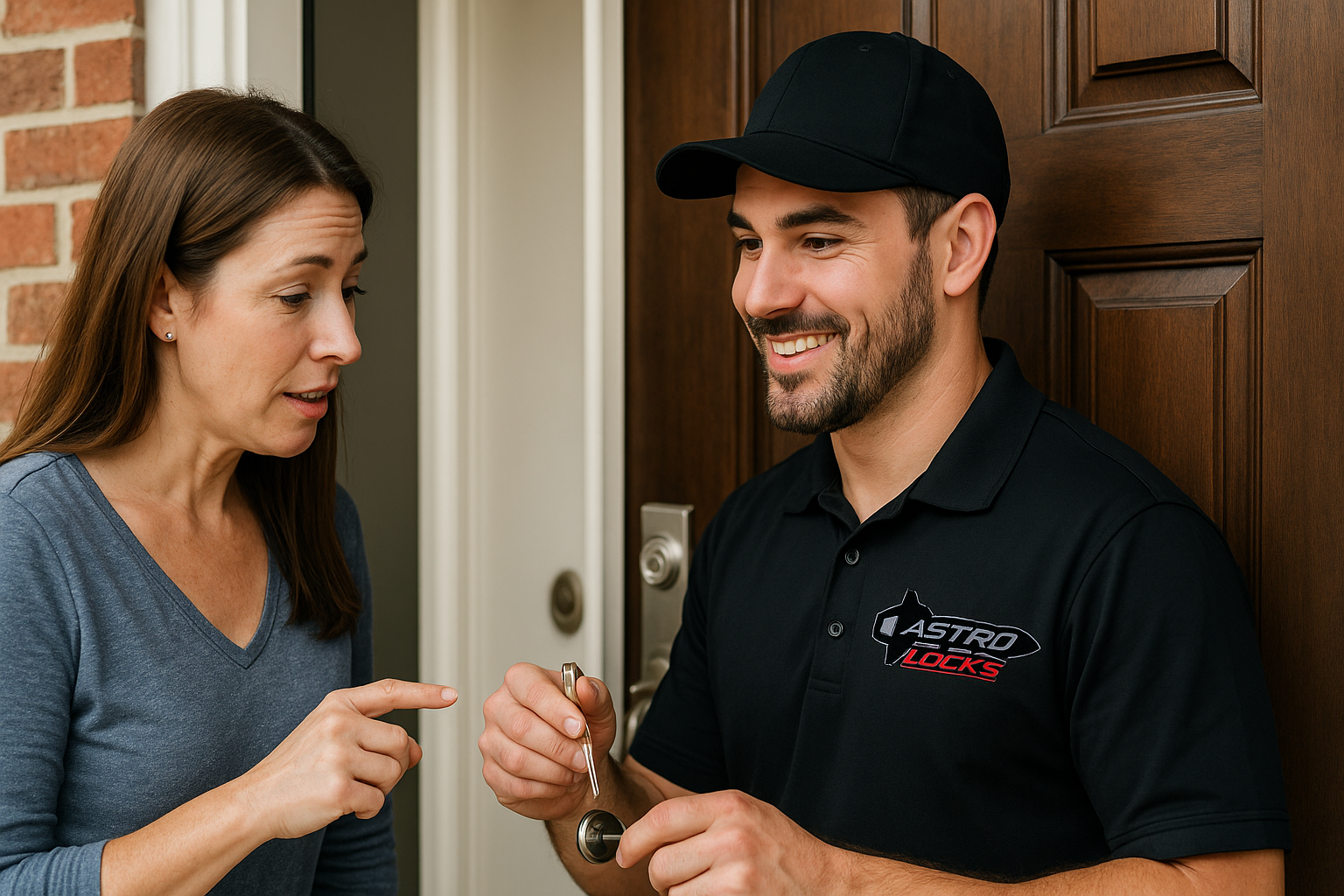
How combining traditional locksmith expertise with modern smart technology creates unbeatable home protection
After serving hundreds of Boston homeowners across neighborhoods from Beacon Hill to Jamaica Plain, we've noticed a troubling pattern. Many residents invest in alarm systems and security cameras while overlooking fundamental vulnerabilities that burglars exploit daily. The truth is, most break-ins succeed not because of sophisticated techniques, but because homeowners unknowingly leave their properties exposed through common security mistakes. As a trusted Boston locksmith company , we've been called to homes after break-ins where a simple $50 fix could have prevented thousands in losses and irreplaceable emotional distress. This guide reveals the seven most dangerous security mistakes we encounter and provides professional solutions you can implement immediately to protect your family and property.
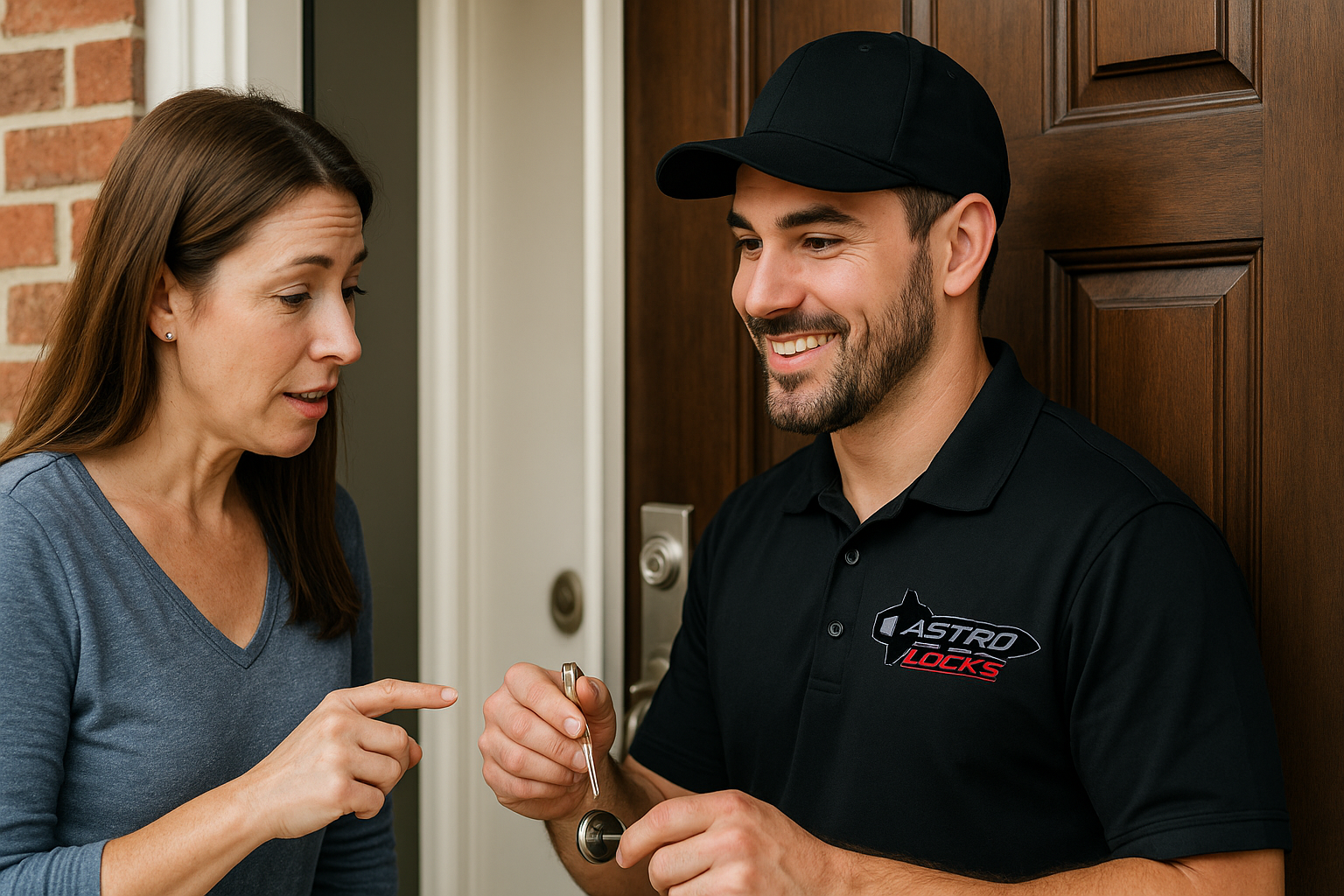
We get it. When your locks are "working well enough," upgrading your security system often falls to the bottom of your to-do list. Between mortgage payments, business expenses, and everyday life, spending money on new locks or access control systems can feel like an unnecessary luxury - especially when what you have still turns.
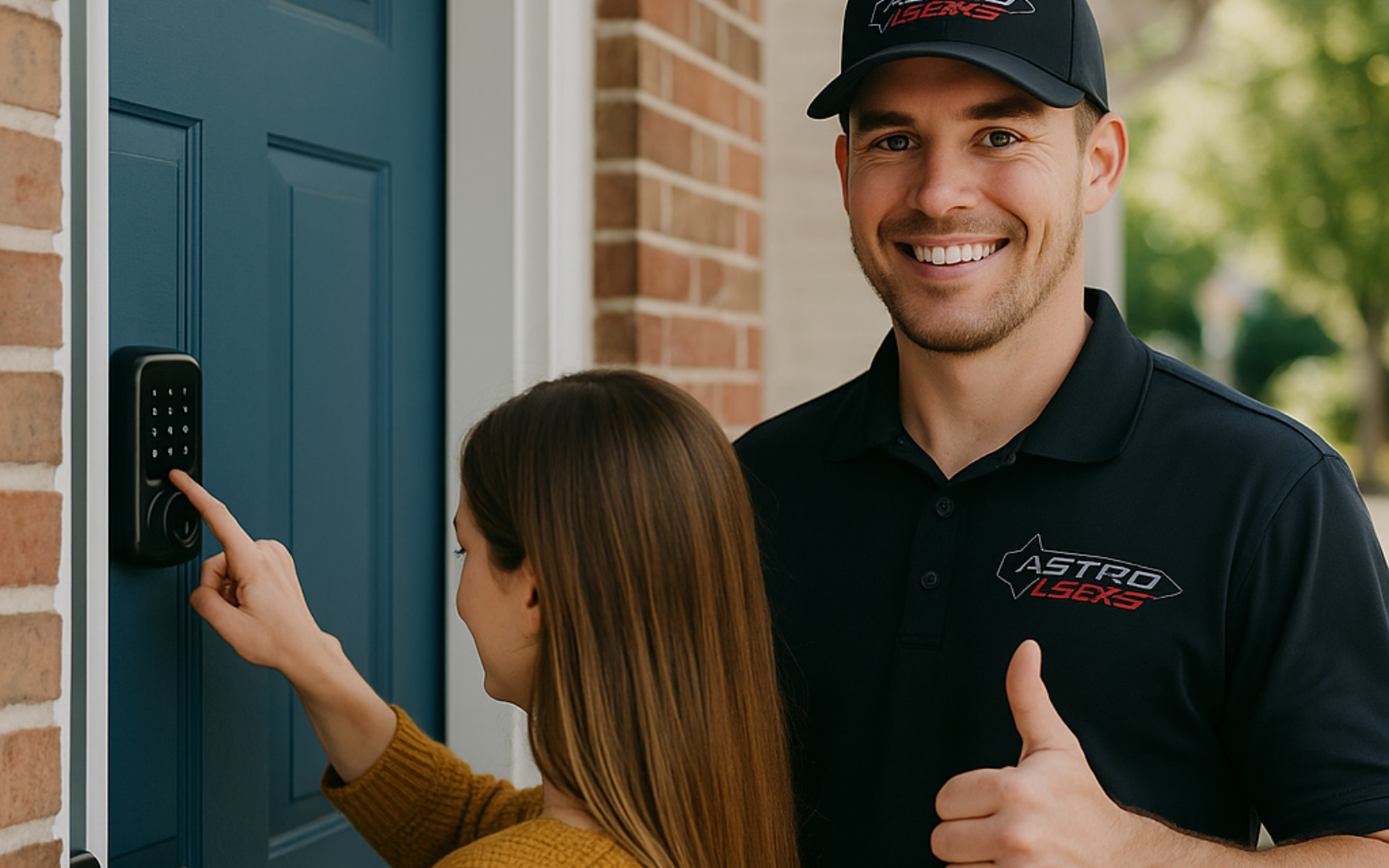
Discover why more Sharon homeowners are upgrading to smart locks in 2025. Learn how Astro Locks helps families enjoy security, convenience, and peace of mind.
Updated: September 2025 Security threats are evolving faster than ever, and property owners across Boston are facing new challenges in protecting their homes and businesses. Whether you're a homeowner in Brookline, a property manager in Cambridge, or a business owner downtown, understanding the latest security trends and best practices isn't just smart - it's essential. This comprehensive guide breaks down everything you need to know about modern security systems, locksmith services, and the strategies that are keeping Boston properties safe in 2025. From smart lock technology to commercial access control systems, we'll cover the critical information that every property owner should understand.